


Why CS2 cases go up in price: the drop pool, rotation and how case prices grow
Active cases gain supply through weekly drops. Once a case leaves the rotation, fewer new copies enter the market while openings keep reducing the available stock. Contents, demand and Valve decisions also affect the price.

In short: three forces that move a case price
- Supply. Weekly drops replenish cases in the active pool; other sources of new cases depend on Valve updates. Leaving the weekly rotation ends that supply channel, while every opening permanently consumes one case.
- Demand. Cases are opened by the millions every week: a key costs a fixed $2.49 and the drop can be sold right away. Add investors, streamers and the Chinese market, where cases are a common way to keep money inside Steam.
- Valve. Valve can bring an old case back into rotation, release a new one, change drop or trading rules. That is the main risk: a case price rests on the expectation that supply will not grow.
Where cases come from: the weekly drop and the drop pool
The weekly drop is one source of new cases; additional sources depend on Valve updates. A Prime account receives a Care Package for its first profile level-up in a weekly cycle: you normally choose two of four offered rewards, while an egg or feed uses both choices. Which case can appear among the rewards is decided by the drop pool — the list of cases in the giveaway. Today it has a single level, the active pool; from 2018 to 2025 there was a second one, the rare pool.
- Active drop pool — recent cases that drop with the main weight. Usually the last 6–10 cases.
- Rare drop pool (2018–2025) — older cases that dropped noticeably less often. Valve introduced it in 2018 so that old cases neither vanish completely nor lose value. It has been empty since December 17, 2025.
- Discontinued — cases that do not drop at all. The only way to get one is to buy it from another player.


Moving between these levels is the "rotation" investors talk about. Today the rule is simple: a case leaves the active pool and is discontinued straight away — from then on it can only be bought on the market or traded for, and no new copies appear. From 2018 to 2025 there was an intermediate step, the rare pool: supply first dropped several times over and went to zero only on full removal. We track every drop pool change and mark these events on price charts so you can see how the market reacted.
Why demand for cases does not fade
A case is useless on its own: opening it needs a $2.49 key that is bought only in-game and has not been tradable on the Market since 2019. So the case price is effectively an "entry fee" to the contents. As long as there are desirable skins and knives inside, cases will be bought and opened, and every opening permanently reduces the number of cases.
- Openings. The most popular cases are opened hundreds of thousands of times a day. That is a constant burn of supply.
- Investors. Cases are the most liquid CS2 item: they can be sold at any moment and the spread between buy and sell is minimal. That is why people "park" money in cases inside Steam and buy them by the thousands after a case leaves rotation.
- Regional demand. In China and in countries without convenient Steam payments, cases and keys are a way to move balance between accounts and platforms.
- News. The CS2 release, big updates, Majors and operations bring new players — and new openers.
What happens to the price when a case leaves rotation
While a case is in the active pool, weekly drops replenish its stock and can put downward pressure on its price. After it leaves the pool, players and investors may continue selling accumulated cases. Openings reduce stock, but that alone does not guarantee a higher price: demand and Valve decisions also matter. There is no universal one-year or eighteen-month timeline — prices can rise, stay flat or fall.
But not always. Cases with a very large print run or unpopular contents can stand still for years. So look at real statistics rather than a "rule": on the rotation history page we compute what happened to every case price 30, 90, 180 and 365 days after it left the pool — from the actual Steam sales history.
The most expensive CS2 cases today
Many expensive cases are old and discontinued. Their supply no longer grows through regular drops, while openings continue to reduce it. The prices below use the best current offer across marketplaces.
 CS:GO Weapon Case $97.61 20132
  Operation Bravo Case $48.78 20133
  eSports 2013 Case $38.96 20144
  Operation Hydra Case $24.30 20175
  CS:GO Weapon Case 2 $17.20 20136
  CS:GO Weapon Case 3 $11.13 20137
  eSports 2014 Summer Case $10.11 20148
  eSports 2013 Winter Case $9.51 2014
Check the contents of the specific case: not every expensive skin can be unboxed. AWP | Dragon Lore belongs to a collection rather than a regular weapon case; M4A4 | Howl was removed from its case and can no longer drop from it. AK-47 | Case Hardened is available in its corresponding case, and a rare pattern can affect the skin price. Demand for the available contents is only one factor in a case price.


The cheapest cases: why they cost pennies
At the other end are cases from the active pool. They drop by the millions, so the price sits at the market minimum. That does not make them bad: cheap cases give the best return per dollar when opening, because almost the entire cost of an opening is the key, not the case. You can check the return of any official case in the checker.
 Kilowatt Case $0.09 20242
 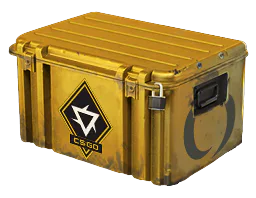 Revolution Case $0.12 20233
  Recoil Case $0.19 20224
  Snakebite Case $0.26 20215
  Fracture Case $0.32 20206
 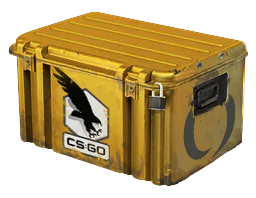 Clutch Case $0.35 20177
  Gallery Case $0.53 20248
  Fever Case $0.53 2025
What to look at if you want to know which case will grow
- Drop pool status. A case in the active pool hardly grows. The key signal is leaving the active pool: today a case is discontinued straight away and can then only be bought or traded for. From 2018 to 2025 the rare pool sat between those steps, so the charts of older cases show two signals. Watch the drop pool: changes usually coincide with major updates.
- Contents. Popular skins and knives can support opening demand. Appealing contents do not guarantee a higher case price, though: player preferences change.
- Market stock. The number of listings on the Steam Market and marketplaces shows how many cases are still "in hands". While there are hundreds of thousands of listings, growth is far away.
- Opening volume. Indirectly visible in the number of fresh skins from the case on marketplaces and in the case sales volume on Steam.
- Valve actions. Returning a case to the drop (it has happened before with major updates) crashes the price within days. That is the main risk of any case position.
Buying and selling cases: fees and limits
On the Steam Market, the 5% Steam fee and 10% CS2 fee are calculated on the seller amount. The seller therefore receives approximately the buyer price ÷ 1.15, rather than the price minus 15%; rounding and minimum fees affect the exact amount. The money stays in the Steam wallet and cannot be withdrawn. Marketplaces charge lower fees and pay out to a card, but prices are usually a bit below Steam. Purchases come with transfer restrictions — keep them in mind if you plan to resell quickly. Current fees and best prices for every case are on its page in the cases section.
| Where | Seller fee | Cash out | Best for |
|---|---|---|---|
| Steam Community Market | 5% Steam + 10% CS2 | No, Steam wallet only | Buying keys and other items |
| Marketplaces (Skinport, market.csgo, DMarket etc.) | usually 2–12% | Yes, to a card or wallet | Converting to real money |
| Direct trades between players | 0% | Depends on the deal | Large volumes without fees, but with risk |
Real statistics: what happened to every case price 30, 90, 180 and 365 days after leaving the drop pool.
Case rotation historyQuestions and answers
Why are old CS2 cases so expensive?
Openings consume cases, and the end of regular drops can reduce the inflow of new copies. Continued demand may support the price, but growth is not guaranteed. Check the contents: AWP | Dragon Lore does not drop from regular weapon cases, and M4A4 | Howl was removed from its case.
What is the drop pool?
The list of cases that can appear in the weekly drop. Today that is only the active pool; the rare pool, where older cases dropped noticeably less often, was introduced in 2018 and has been empty since December 17, 2025. Discontinued cases do not drop at all. The current composition is on the drop pool page.
How long until a case grows after leaving rotation?
There is no fixed timeline, and growth may never occur. Stock, openings, demand and Valve decisions all affect the price. The rotation history page lets you compare actual price changes after past rotations; it is not a forecast of future returns.
Which case should I buy so that it grows?
No case is guaranteed to rise, and we do not give investment advice. Compare contents, available stock, demand and sources of new cases. Valve rule changes can affect prices in either direction.
Can I withdraw money from selling cases on Steam?
Not from the Steam Market — the money stays in the Steam wallet. To convert to real money, cases are sold on marketplaces with lower fees, usually at a slightly lower price.
Why does a case from the active pool cost a few cents?
Because it drops to millions of players every week and supply is constantly replenished. The price sits at the market minimum until the case leaves the active pool.